Complete brief
Project details
Project video available
Watch the demonstration on YouTube.
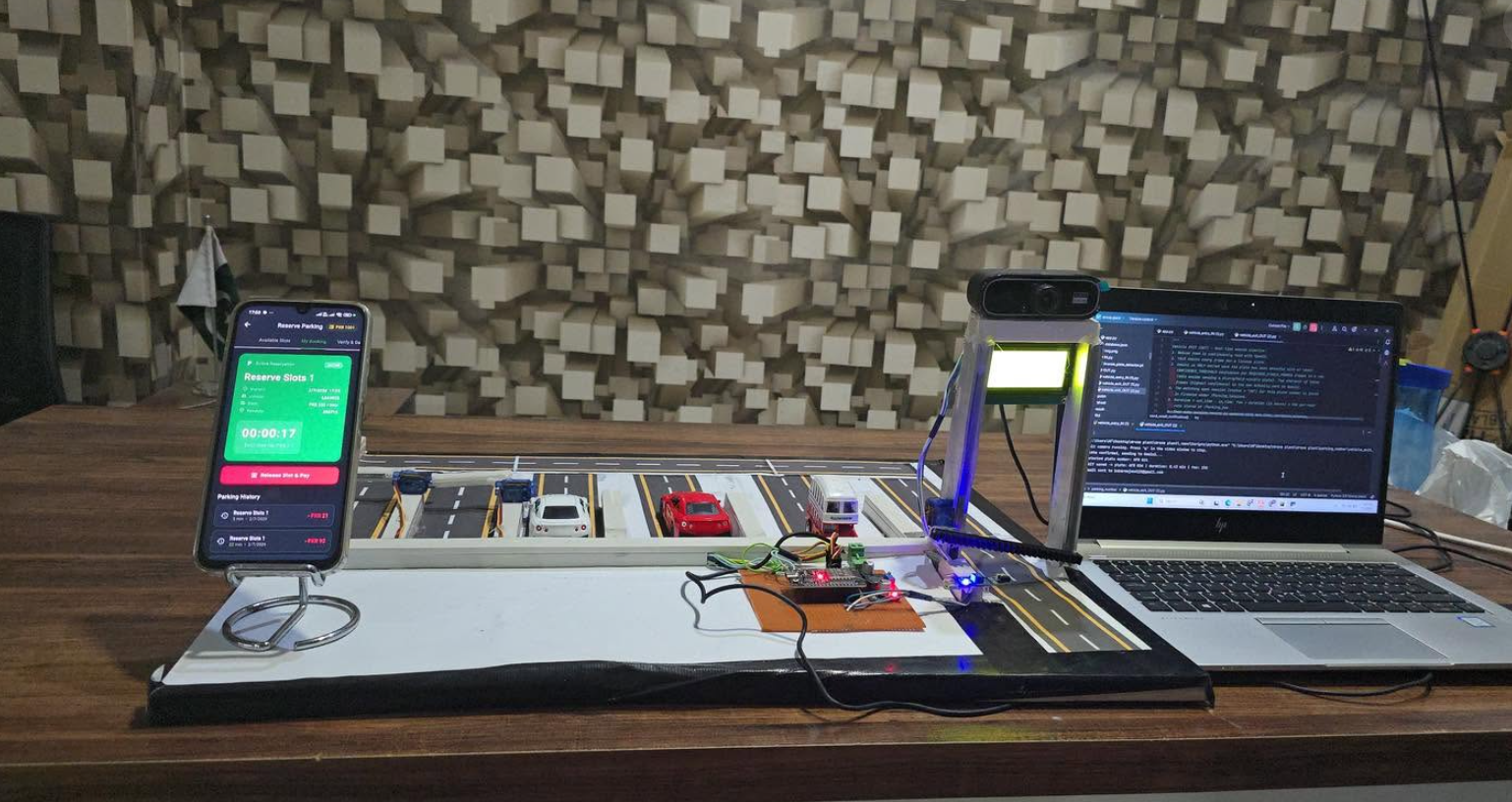
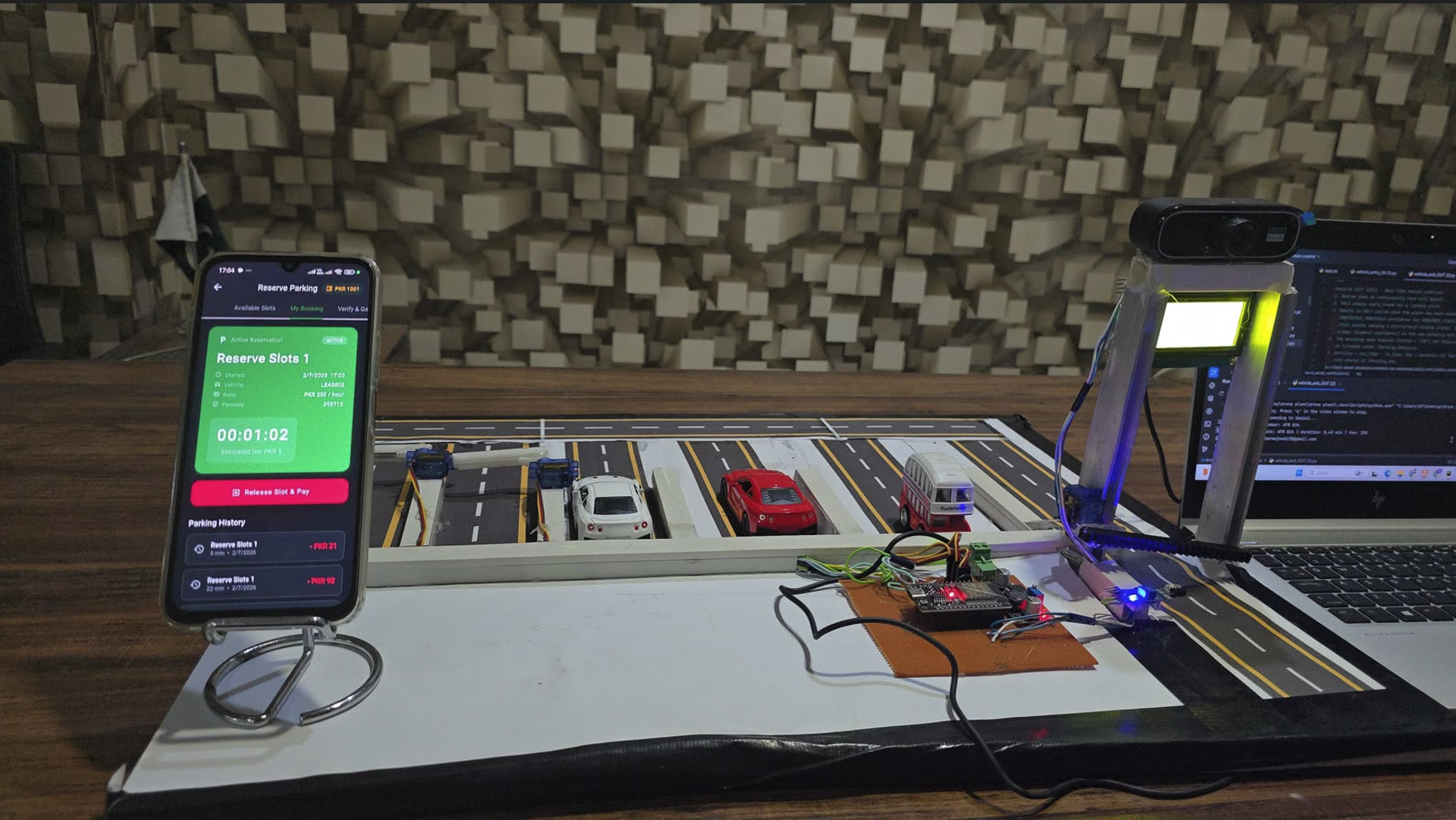
### Research & Description This project focuses on the development of a **Smart Vertical Parking System using Artificial Intelligence, Computer Vision, and IoT technology**. The main purpose of the system is to solve parking space problems in crowded areas by using vertical parking structures and intelligent vehicle detection. Traditional parking systems usually require more land, manual supervision, and extra time for drivers to find an available space. This project introduces a smarter and more automated approach. During the research phase, the main focus was on vehicle detection, parking slot monitoring, vehicle alignment, IoT-based control, and real-time dashboard communication. The system uses a camera with **OpenCV** to monitor the parking area. The camera detects incoming vehicles and checks whether a parking slot is available. It also helps determine whether the vehicle is correctly aligned below the selected vertical parking position. Once the vehicle reaches the correct position, the software sends a control signal to the **ESP32**. The ESP32 can then operate relays, motors, indicators, or other connected hardware required for the parking mechanism. The project also includes a real-time web dashboard that can show important information such as: * Available parking slots * Occupied parking slots * Vehicle detection status * Vehicle alignment status * Entry permission * Parking system alerts * Manual control options The dashboard can be developed using **Flask, Firebase, and Tailwind CSS**, while Wi-Fi communication allows the ESP32 and software system to exchange data. Another important part of the research was parking safety. The system should not move the parking platform unless the vehicle is correctly positioned. It should also stop new vehicles from entering when all parking spaces are occupied. For better vehicle detection, the system can be upgraded with **YOLO or another object detection model**. This can help improve vehicle recognition in different lighting conditions and busy parking environments. The project combines several technologies, including: * Artificial Intelligence * OpenCV * ESP32 * IoT * Python * Flask * Firebase * Computer Vision * Relay and Motor Control * Real-Time Monitoring The final goal of the project is to create a practical smart parking solution that can save space, reduce manual work, improve parking efficiency, and support future smart city applications. This system can be useful in shopping malls, offices, hospitals, residential buildings, airports, underground parking areas, and other locations where parking space is limited.
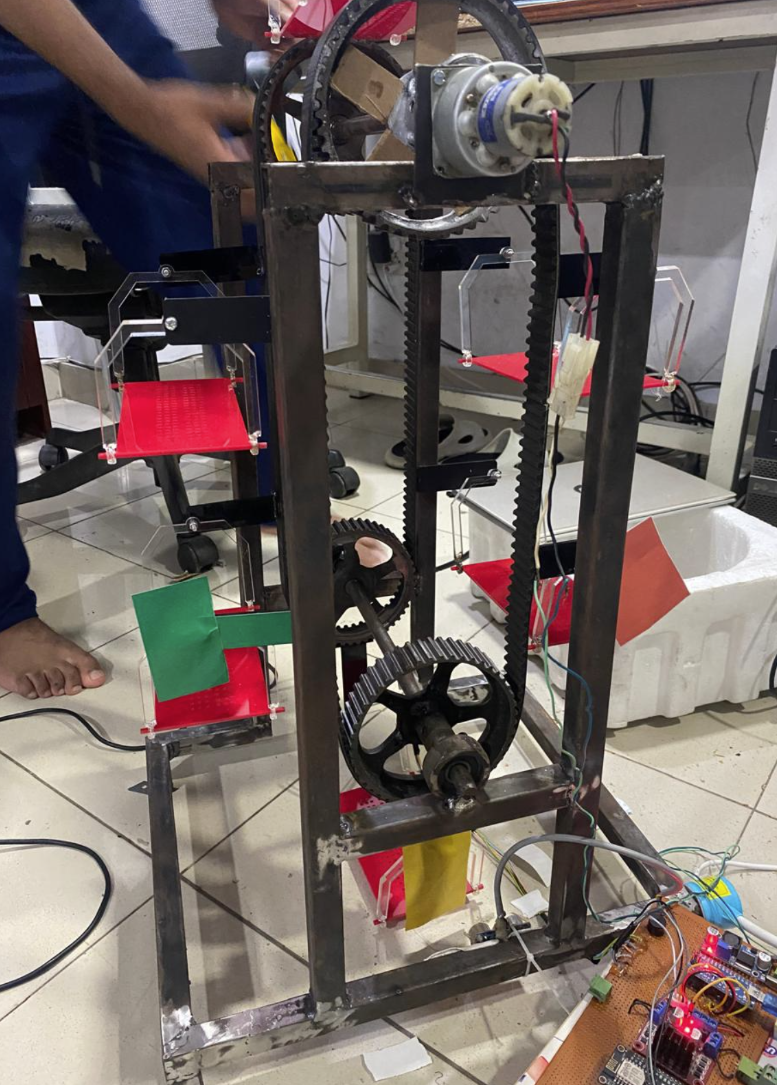
### Research & Description This project focuses on the development of a **Smart Vertical Parking System using Artificial Intelligence, Computer Vision, and IoT technology**. The main purpose of the system is to solve parking space problems in crowded areas by using vertical parking structures and intelligent vehicle detection. Traditional parking systems usually require more land, manual supervision, and extra time for drivers to find an available space. This project introduces a smarter and more automated approach. During the research phase, the main focus was on vehicle detection, parking slot monitoring, vehicle alignment, IoT-based control, and real-time dashboard communication. The system uses a camera with **OpenCV** to monitor the parking area. The camera detects incoming vehicles and checks whether a parking slot is available. It also helps determine whether the vehicle is correctly aligned below the selected vertical parking position. Once the vehicle reaches the correct position, the software sends a control signal to the **ESP32**. The ESP32 can then operate relays, motors, indicators, or other connected hardware required for the parking mechanism. The project also includes a real-time web dashboard that can show important information such as: * Available parking slots * Occupied parking slots * Vehicle detection status * Vehicle alignment status * Entry permission * Parking system alerts * Manual control options The dashboard can be developed using **Flask, Firebase, and Tailwind CSS**, while Wi-Fi communication allows the ESP32 and software system to exchange data. Another important part of the research was parking safety. The system should not move the parking platform unless the vehicle is correctly positioned. It should also stop new vehicles from entering when all parking spaces are occupied. For better vehicle detection, the system can be upgraded with **YOLO or another object detection model**. This can help improve vehicle recognition in different lighting conditions and busy parking environments. The project combines several technologies, including: * Artificial Intelligence * OpenCV * ESP32 * IoT * Python * Flask * Firebase * Computer Vision * Relay and Motor Control * Real-Time Monitoring The final goal of the project is to create a practical smart parking solution that can save space, reduce manual work, improve parking efficiency, and support future smart city applications. This system can be useful in shopping malls, offices, hospitals, residential buildings, airports, underground parking areas, and other locations where parking space is limited.