Article guide
Read, understand and apply the ideas to your project.
Dive into the Future: 5 Major Web Design Trends for 2026
Hey future developers and designers! The web changes super fast, and staying updated is key to building awesome projects. What's hot today might be old news tomorrow. That's why we're looking ahead to 2026 to see what major web design trends will shape the internet. Get ready to explore new ideas and make your projects stand out!
Why Do Web Design Trends Matter?
Understanding trends isn't just about what looks good. It's about making websites better for users, more efficient, and more engaging. Trends often come from new technologies, user needs, and changing tastes. Knowing them helps you:
- Build modern, relevant websites.
- Improve user experience (UX) and user interface (UI).
- Make your projects more competitive.
- Learn new tools and techniques.
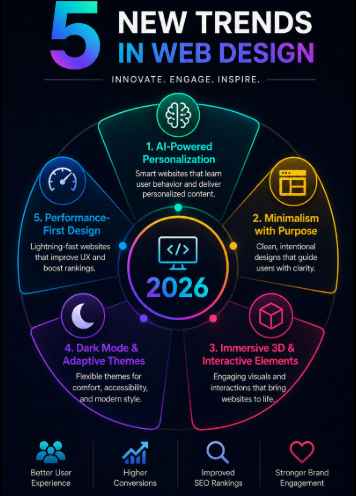
The 5 Major Web Design Trends for 2026
1. Immersive Experiences (Beyond Flat Screens)
Imagine websites that feel like you're stepping into them! This trend is about creating highly interactive and engaging experiences that go beyond simple 2D pages. Think 3D elements, virtual tours, and even basic augmented reality (AR) features accessible right from your browser.
- Tips for embracing this:
- Focus on performance: immersive elements can be heavy, so optimize everything.
- Ensure accessibility: provide alternatives for users who can't or prefer not to engage with 3D/AR.
- Start small: use subtle 3D interactions before going full VR.
- Tools: Three.js, A-Frame, WebGL for 3D graphics; various JavaScript libraries for interactive elements.
- Real-world applications: Product showcases (virtual try-ons), museum tours, interactive storytelling.
2. AI-Powered Personalization
Websites in 2026 will be smarter, adapting content and design based on who is visiting. AI will analyze user behavior to show personalized recommendations, dynamically adjust layouts, and even generate unique content sections.
- Tips for embracing this:
- Prioritize user privacy and data security.
- Design flexible layouts that can adapt to different content.
- Use AI ethically and transparently.
- Tools: Machine learning APIs (e.g., Google Cloud AI), user analytics platforms, recommendation engines.
- Real-world applications: E-commerce product suggestions, news feeds, dynamic landing pages.
3. Sustainable Web Design (Green Web)
With growing environmental awareness, designing for a greener web is crucial. This trend focuses on reducing the carbon footprint of websites by making them more efficient, using less data, and choosing eco-friendly hosting.
- Tips for embracing this:
- Optimize images and videos for smaller file sizes.
- Use efficient code and minimal third-party scripts.
- Implement dark mode options (saves energy on OLED screens).
- Choose web hosts powered by renewable energy.
- Tools: Lighthouse (for performance audits), Eco-Grader, Green Hosting Directories.
- Real-world applications: Non-profit websites, eco-conscious brands, government sites.
4. Hyper-Minimalism with Bold Statements
While minimalism has been around, 2026 sees it evolve into 'hyper-minimalism' – stripping designs down to their absolute essentials, combined with occasional bold, unexpected elements like strong typography, unusual layouts, or vibrant accent colors. It's about impact with less clutter.
- Tips for embracing this:
- Master typography: type will carry much of the design.
- Focus on whitespace: let elements breathe.
- Use bold elements sparingly for maximum effect.
- Ensure perfect alignment and spacing.
- Tools: Figma, Adobe XD (for prototyping clean interfaces), Google Fonts (for strong typography).
- Real-world applications: Portfolio sites, tech startups, high-end product pages.
5. Advanced Motion & Micro-interactions
Animations will become more refined and purposeful. Beyond simple hover effects, expect smooth transitions, engaging scroll-based animations, and meaningful micro-interactions that guide users and provide delightful feedback without being distracting.
- Tips for embracing this:
- Animations should serve a purpose, not just be decorative.
- Keep file sizes small for Lottie animations or GIFs.
- Ensure animations are smooth and don't slow down the site.
- Provide options to reduce motion for users with vestibular sensitivities.
- Tools: GSAP (GreenSock Animation Platform), Lottie (for After Effects animations on web), CSS animations.
- Real-world applications: Onboarding sequences, data visualization, interactive storytelling.
Common Mistakes to Avoid
- Overdoing it: Don't try to cram every trend into one project. Focus on what makes sense for your goals.
- Ignoring accessibility: Trends should enhance, not hinder, usability for everyone.
- Poor performance: Flashy designs that load slowly frustrate users.
- Forgetting the user: Always design with your target audience in mind, not just for trends.
Ready to Build?
The future of web design is exciting and full of possibilities! By understanding these major trends for 2026, you're well-equipped to create innovative and impactful web projects. Start experimenting with these ideas in your next assignment or personal project.
Explore more projects on Projects Hub and start building your future today!