Quick Summary
Discover 12 defining web development trends for 2026. Learn about AI, Web3, Serverless, and more to future-proof your skills and build cutting-edge project
Full Article
Formatted content with headings, lists & code blocks
12 Web Development Trends to Master by 2026: Your Future-Proof Guide
Hey future-forward developers and aspiring engineers! The world of web development is a vibrant, ever-changing landscape. What's cutting-edge today might be standard tomorrow, and keeping up can feel like a full-time job. But don't worry, we're here to help you navigate the exciting shifts ahead.
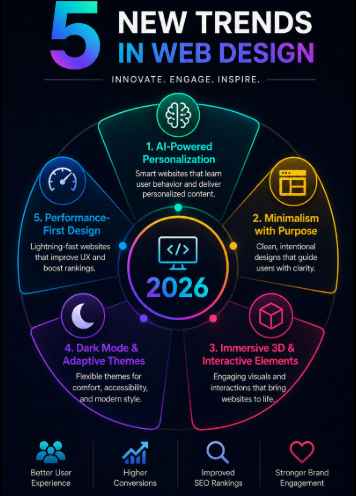
By 2026, several key trends will define how we build and interact with the web. Understanding these isn't just about staying relevant; it's about positioning yourself at the forefront of innovation. Let's dive into the defining trends that will shape your projects and careers in the coming years!
Key Web Development Trends for 2026
Get ready to explore the foundational shifts happening across frontend, backend, and full-stack development:
- AI & ML Integration: Smarter Web Experiences
- The Nitty-Gritty: Expect AI to be deeply embedded in web applications, powering personalized content, intelligent search, automated customer support (chatbots), and even generating code snippets. Machine learning will enhance user experience through predictive analytics and adaptive interfaces.
- Web3 & Decentralization: The Next Internet Frontier
- The Nitty-Gritty: Beyond cryptocurrencies, Web3 embraces blockchain technology for decentralized applications (DApps), non-fungible tokens (NFTs), and decentralized identity. We'll see more dApps, true digital ownership, and enhanced privacy.
- Serverless Architecture & Edge Computing: Scalability & Speed
- The Nitty-Gritty: Building and deploying applications without managing servers will become even more prevalent. Edge computing brings data processing closer to the user, reducing latency and improving responsiveness for global applications.
- Advanced Frontend Frameworks & Meta-frameworks: Enhanced DX & Performance
- The Nitty-Gritty: While React, Vue, and Angular remain strong, meta-frameworks like Next.js, Nuxt.js, SvelteKit, and Astro will dominate for their blend of developer experience, performance optimizations (SSR, SSG), and full-stack capabilities.
- Progressive Web Apps (PWAs) & Offline Capabilities: App-like Experiences
- The Nitty-Gritty: PWAs offer the best of both web and mobile apps – fast, reliable, engaging, and capable of working offline. Expect more websites to adopt PWA features for enhanced user retention and accessibility.
- Low-Code/No-Code Platforms: Rapid Development & Prototyping
- The Nitty-Gritty: These platforms empower developers to build and deploy applications faster, often by abstracting away complex coding. They're excellent for MVPs, internal tools, and accelerating project timelines, freeing up developers for more complex tasks.
- Micro-Frontends & Microservices: Modular & Scalable Architectures
- The Nitty-Gritty: For large-scale applications, breaking down monolithic frontends and backends into smaller, independently deployable units improves development speed, scalability, and team autonomy.
- Green Coding & Sustainable Web Development: Eco-Conscious Building
- The Nitty-Gritty: Developers will increasingly focus on writing efficient code, optimizing infrastructure, and choosing eco-friendly hosting to reduce the environmental impact of web applications. Performance optimization directly translates to energy savings!
- Enhanced Cybersecurity & Privacy by Design: Trust & Security First
- The Nitty-Gritty: With increasing data breaches, baking security and privacy into the design of web applications from the outset is non-negotiable. This includes robust authentication, data encryption, and transparent consent management.
- Voice & Conversational UI: Natural Interactions
- The Nitty-Gritty: Integrating voice commands and sophisticated chatbots will make web applications more accessible and intuitive. Think beyond simple commands to complex, natural language interactions.
- Augmented Reality (AR) in the Browser (WebXR): Immersive Experiences
- The Nitty-Gritty: WebXR APIs are making AR experiences directly accessible through web browsers without needing dedicated apps. Imagine trying on clothes virtually or placing furniture in your room from an e-commerce site.
- Visual Storytelling & Immersive 3D Graphics: Engaging User Experiences
- The Nitty-Gritty: High-performance 3D graphics (via WebGL/WebGPU), advanced animations, and interactive data visualizations will be used to create more engaging and memorable user experiences, especially in portfolios, marketing sites, and educational platforms.
How to Embrace These Trends: Your Action Plan
Feeling inspired? Here's how you can start integrating these trends into your skill set:
- Pick Your Battles: Don't try to master all 12 at once! Identify 2-3 trends that genuinely excite you or align with your career goals.
- Hands-On Projects are Key: The best way to learn is by doing. Start a mini-project for each chosen trend. Want to learn Web3? Build a simple DApp. Interested in AI? Integrate a TensorFlow.js model into a frontend.
- Stay Curious & Connected: Follow leading developers, join online communities (like Discord or Reddit groups for specific tech), read tech blogs, and subscribe to newsletters.
- Deep Dive into Fundamentals: New trends often build on existing principles. A strong grasp of JavaScript, data structures, and algorithms will always be your superpower.
- Contribute to Open Source: Find projects related to these trends on GitHub and contribute. It's an excellent way to learn from experienced developers and build your portfolio.
Essential Tools & Technologies to Explore
To get you started, here are some tools tied to the trends:
- AI/ML: TensorFlow.js, Python libraries (Scikit-learn, PyTorch, Keras) for backend APIs.
- Web3: Ethereum (Solidity), Solana, Web3.js, Ethers.js, Hardhat, Truffle, IPFS.
- Serverless: AWS Lambda, Azure Functions, Google Cloud Functions, Netlify Functions, Vercel.
- Frontend Meta-frameworks: Next.js, Nuxt.js, SvelteKit, Astro.
- PWAs: Workbox (Google Chrome Labs), Lighthouse for auditing.
- Low-Code/No-Code: Webflow, Bubble, Adalo.
- AR/3D: WebXR Device API, Three.js, A-Frame, Babylon.js.
- Green Coding: Tools for performance auditing (Lighthouse, WebPageTest), efficient CDNs, server-side caching.
Real-World Applications in Action
These trends aren't just theoretical; they're already shaping real products:
- Personalized E-commerce: AI recommends products based on browsing history.
- Decentralized Social Platforms: Users own their data and content (Web3).
- Global Streaming Services: Serverless architecture handles massive, fluctuating traffic.
- Immersive Product Configurators: AR allows users to visualize products in their own space.
- Offline-Capable Productivity Apps: PWAs ensure continuous work even without internet.
Common Mistakes to Avoid on Your Trend Journey
Steer clear of these pitfalls to make your learning journey smoother:
- The "Shiny Object" Syndrome: Don't jump on every new trend without understanding its actual value or fit for your goals. Focus and depth are more valuable than shallow breadth.
- Neglecting Fundamentals: Frameworks and libraries come and go, but core programming concepts, design patterns, and problem-solving skills are timeless.
- Ignoring Performance & Security: Even the coolest new feature won't matter if your app is slow, buggy, or insecure. Always prioritize these non-negotiables.
- Learning in Isolation: Engage with the community! You'll learn faster, get help when stuck, and discover new perspectives.
- Over-Engineering: Start simple. Implement a trend on a small scale first, then build complexity as needed.
Conclusion: Your Future Starts Now!
The web development landscape of 2026 promises to be dynamic, innovative, and incredibly exciting. By understanding these defining trends and proactively integrating them into your learning path, you're not just preparing for the future – you're actively building it.
Ready to put these insights into practice? Head over to Projects Hub to explore inspiring projects that leverage these cutting-edge technologies, or better yet, start building your own trend-setting project today! The future of the web is in your hands.