Quick Summary
Learn how students can use AI responsibly in their studies and projects. Discover ethical guidelines, practical tips, and common mistakes to avoid. Empower
Full Article
Formatted content with headings, lists & code blocks
Welcome to the Age of AI in Learning!
Artificial Intelligence (AI) is changing everything, including how students learn and create. From writing essays to coding projects, AI tools can be super helpful. But with great power comes great responsibility! It's super important for students to know how to use AI smartly, ethically, and responsibly.
This guide will help you navigate the world of AI so you can get the most out out it without falling into common traps. Let's dive in!
What Does "Responsible AI" Even Mean for Students?
Before we get to the tips, let's understand some key ideas:
- AI Has Limits: AI is a tool, not a human. It doesn't truly "understand" things, and it can make mistakes, generate outdated info, or even create biased content.
- Think Ethically: This means thinking about fairness, privacy, and how using AI affects others. For example, is it fair if you use AI to do all your work while others don't?
- Academic Honesty is Key: Your school expects your work to be your own. Using AI responsibly means using it to help your learning, not to cheat or plagiarize.
Your Guide to Using AI Smartly and Safely
Here are some practical tips to help you use AI responsibly in your academic journey:
Tip 1: Always Double-Check AI's Answers
Think of AI as a very enthusiastic but sometimes inaccurate assistant. If AI gives you facts, figures, or references, always verify them with reliable sources (like textbooks, academic journals, or reputable websites). Don't just copy and paste!
Tip 2: Give Credit Where It's Due
If you use an AI tool to help you brainstorm, summarize, or even write a part of your work, it's good practice to mention it. Check with your instructors or school's guidelines on how to cite AI tools. This shows honesty and academic integrity.
Tip 3: Use AI as a Helper, Not a Cheater
AI is fantastic for:
- Brainstorming ideas for an essay.
- Explaining complex concepts in simpler terms.
- Getting help with coding errors.
- Practicing a new language.
It should never replace your own learning, thinking, or effort. Use it to enhance your skills, not to bypass them.
Tip 4: Understand How AI Works (A Little Bit)
You don't need to be an AI expert, but having a basic idea of how tools like large language models (LLMs) work can help. Knowing that they predict the next best word, rather than understanding, helps you recognize their limitations.
Tip 5: Keep Your Info Private
Be very careful about what personal or sensitive information you type into AI tools, especially public ones. Assume that anything you enter might not be fully private. Never share personal details, confidential project info, or sensitive academic data.
AI Tools Students Can Use (Responsibly!)
Many AI tools can boost your productivity and learning:
- Chatbots (e.g., ChatGPT, Google Gemini, Microsoft Copilot): Great for brainstorming, summarizing, explaining concepts, and generating initial drafts.
- Writing Assistants (e.g., Grammarly AI, QuillBot): Can help refine your writing, check grammar, and rephrase sentences, but always review their suggestions.
- Coding Helpers (e.g., GitHub Copilot): Can suggest code snippets, help debug, and explain code, speeding up development for engineering students.
- Art & Design AI (e.g., Midjourney, DALL-E): Useful for creating visual concepts and inspiration for projects, but be mindful of copyright and ethical sourcing of training data.
How Students Are Already Using AI in Real Life
- Brainstorming & Idea Generation: Quickly get ideas for project topics or essay outlines.
- Summarizing Texts & Notes: Get a quick overview of long articles or lecture notes.
- Coding Support: Debug code, generate basic functions, or learn new programming patterns.
- Language Practice: Practice conversations in a new language or get feedback on writing.
- Initial Research: Ask AI to identify key topics or questions related to a subject, then deep dive using traditional research.
Big Mistakes to Avoid When Using AI
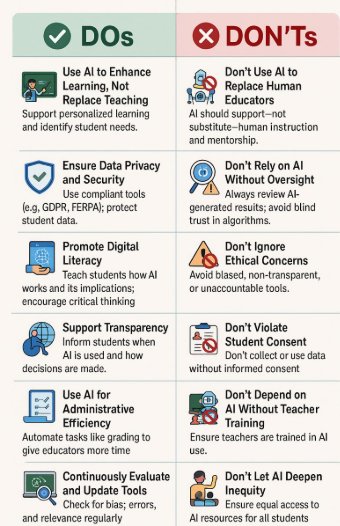
Steer clear of these common pitfalls to ensure you're using AI responsibly:
- Plagiarism Panic!: Submitting AI-generated content as entirely your own original work without any citation or significant personal input. This is a form of plagiarism.
- Believing Everything AI Says: Blindly trusting AI output without verifying facts, leading to incorrect information in your assignments.
- Sharing Private Stuff: Inputting sensitive personal data, project secrets, or confidential research into public AI tools.
- Becoming Over-Reliant: Letting AI do all the thinking for you, which stops you from developing your own critical thinking and problem-solving skills.
- Ignoring the "Why": Using AI just to get an answer, rather than understanding the process or the underlying concepts.
Ready to Learn and Build with AI?
AI is a powerful ally for students, offering new ways to learn, create, and innovate. By understanding its capabilities and limitations, and by following ethical guidelines, you can harness AI to enhance your studies and prepare for a tech-driven future.
Remember, the goal is to use AI to become a better, smarter, and more capable you. Don't let it replace your brain – empower it!
Explore more projects on Projects Hub to see how others are using AI responsibly, or start building your own AI-powered innovations today!